The Missing Step Before Code
Coding agents are effective once the important decisions exist. Starting from a vague prompt usually means tenancy, retries, ownership, and failure paths get discovered in production, where architecture becomes considerably less philosophical. Cunei occupies the missing step: it turns an idea into reviewable system decisions before handing anything to a coding agent.
Clay Is Allowed to Be Annoying
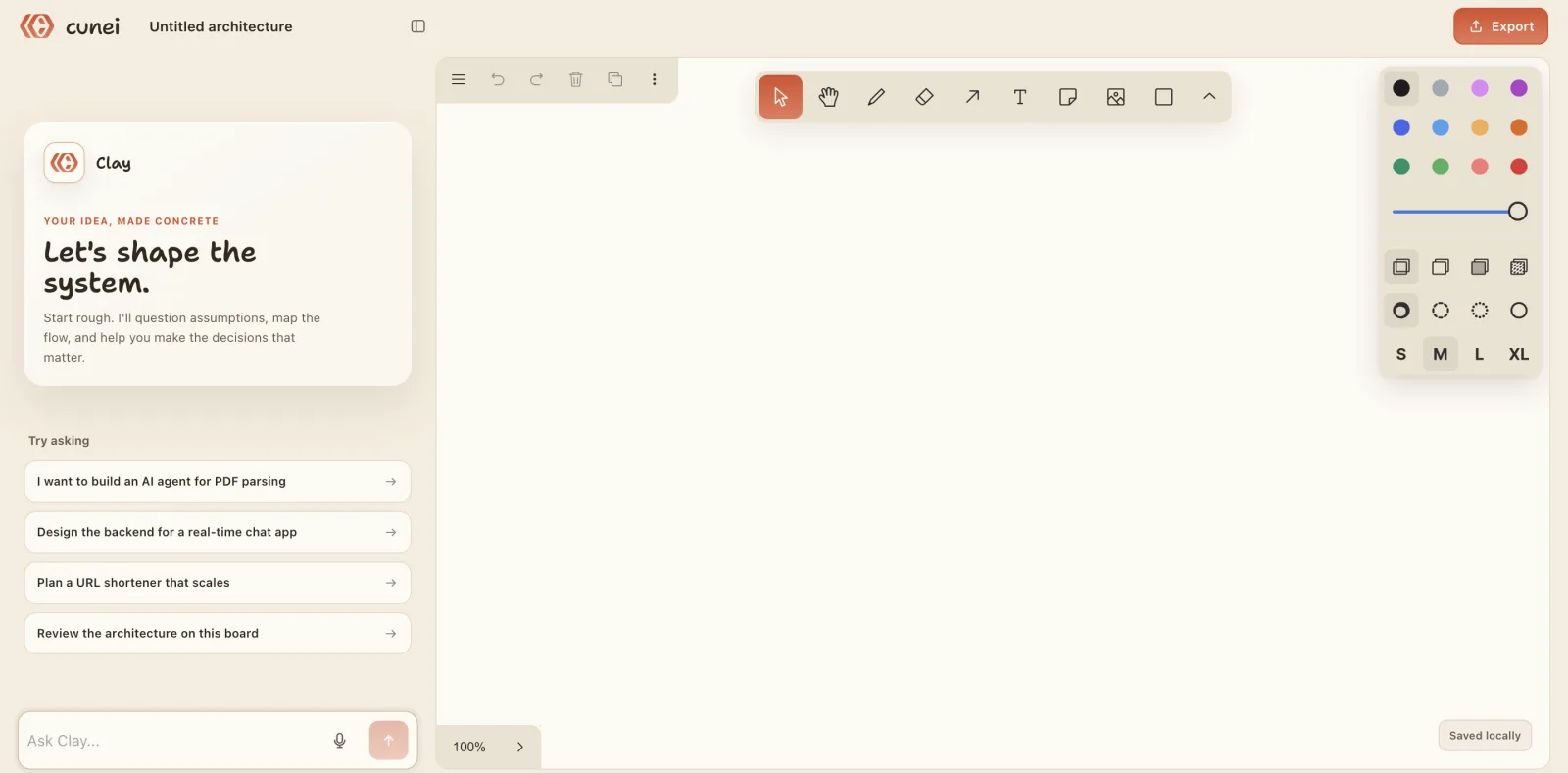
Clay behaves like a staff engineer, not an autocomplete box. The agent is forbidden from drawing until it understands the requirements, data flow, and primary failure mode, and unresolved choices stay visible as open decisions. The extra questions add friction by design; instant diagrams are impressive right up until someone asks what happens when the queue retries.
Model for Judgement, Code for Geometry
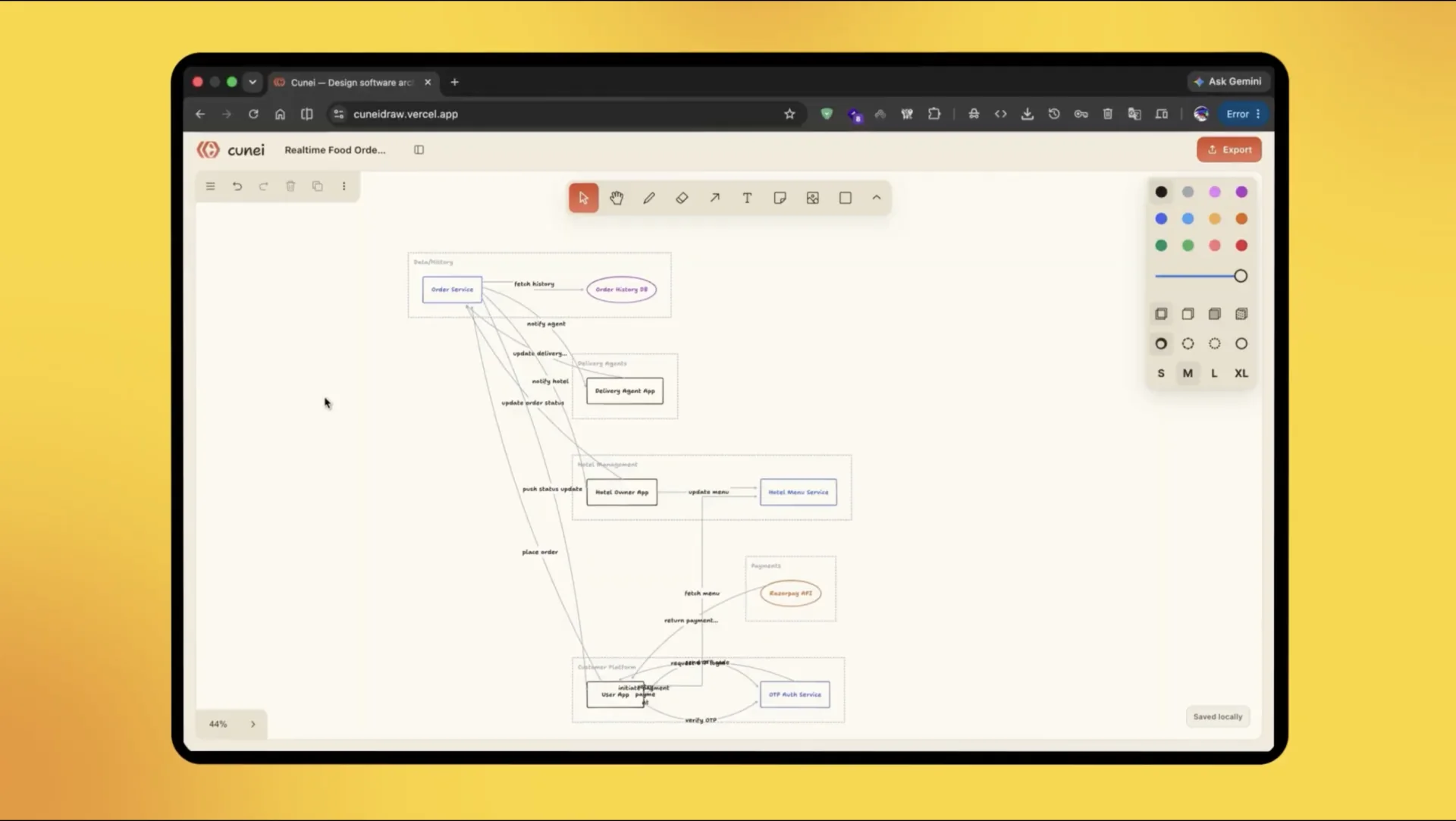
The model reasons over a compact typed architecture graph and never edits raw canvas JSON or invents coordinates. Once a proposal is approved, deterministic code measures labels, lays out layers, routes connectors, and reconciles stable node IDs. That boundary gives the model the ambiguous work and gives geometry to code, which is much less creative about placing arrows through boxes.
Approval Before Mutation
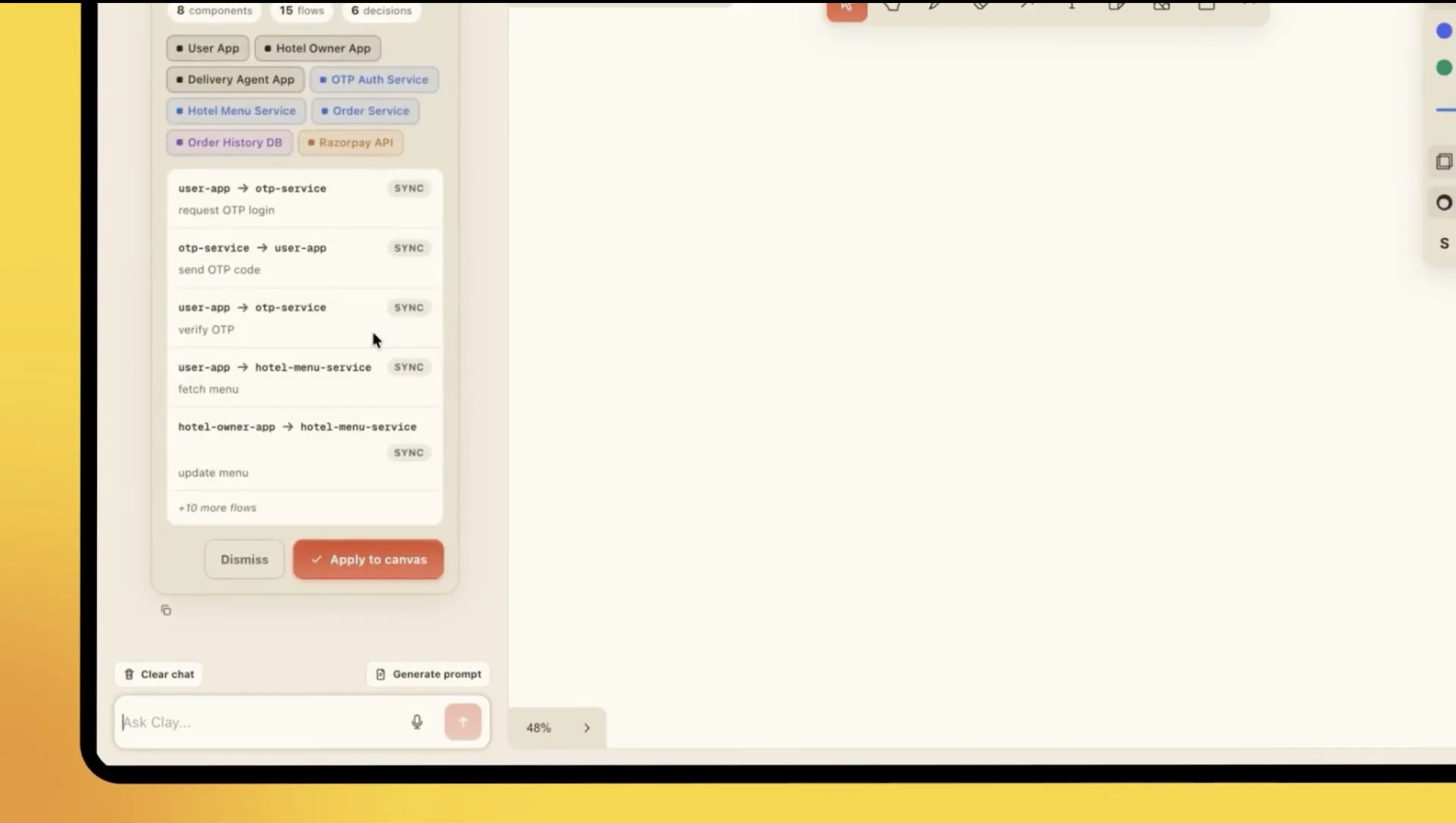
Every architecture change arrives as a proposal that can be dismissed or applied; nothing touches the canvas silently. The approved graph then compiles into both the visual system and an implementation brief containing contracts, rationale, open questions, and a tracer-bullet plan. The diagram is useful, but the real output is better input for the coding agent that comes next.